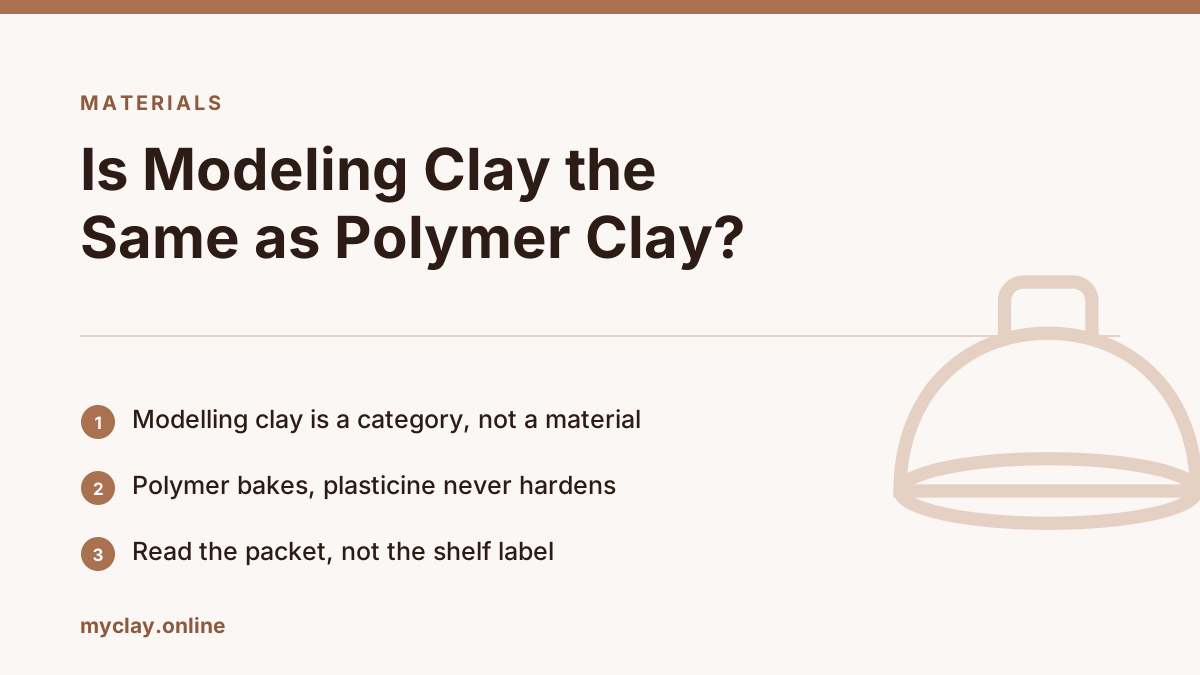
"Modelling clay" is a category, not a material. It covers at least four different substances that share only the property of being soft enough to shape by hand — and they behave completely differently.
From the studio: The mistake I see most often is someone buying a tub labelled only modelling clay, spending a weekend on a figure, and then discovering it will never harden. That tub is almost always plasticine, and the packet will say non-hardening somewhere in small print.
Polymer clay is one member of that category. The confusion is understandable, because shops shelve them together.
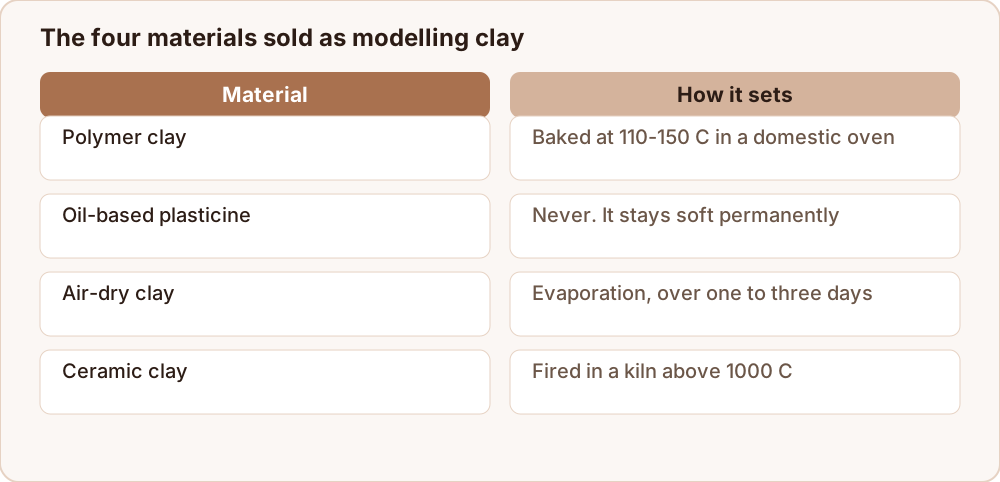
The four materials
Polymer clay
What it is: PVC particles suspended in liquid plasticiser. Not clay in the geological sense at all — there is no clay mineral in it.
How it sets: baked in a domestic oven at 110 to 150 °C depending on brand, for at least 30 minutes per 6 mm of thickness. The particles fuse into a solid, slightly flexible plastic.
Stays workable: indefinitely. It contains no water, so it cannot dry out on the table.
Best for: jewellery, miniatures, figurines, beads, canework — anything small, detailed and meant to last.
Brands: Sculpey, Fimo, Premo, Cernit, Kato.
Oil-based modelling clay (plasticine)
What it is: clay or chalk powder bound with oils and waxes.
How it sets: it does not. Ever. It stays soft permanently, softening further when warm and stiffening when cold.
Best for: animation, prototyping, practising form, mould-making masters, and anything you intend to reuse. Professional versions such as Monster Clay, Chavant and Plastilina are the industry standard for sculpting film props and character models.
Cannot be: baked, fired, or kept as a finished object. It will slump on a warm day.
Air-dry clay
What it is: usually real clay minerals plus cellulose fibre and a binder, though some are entirely synthetic.
How it sets: evaporation, over 24 hours to a week depending on thickness.
Best for: school projects, decorative pieces, cheap practice, large lightweight forms.
Limitations: never fully waterproof, structurally weak, and it shrinks as it dries so thick pieces crack. Sealing with acrylic varnish helps, but it is never food safe or dishwasher safe.
Ceramic (pottery) clay
What it is: actual clay minerals and water, the material pottery is made from.
How it sets: dried, then fired in a kiln at 1000 °C or more. Below that it is not permanent — an unfired pot dissolves in water.
Best for: functional pottery, real ceramics, anything that has to hold liquid or go in a dishwasher.
Quick comparison
| Polymer | Plasticine | Air-dry | Ceramic | |
|---|---|---|---|---|
| Hardens | In the oven | Never | In air | In a kiln |
| Waterproof when set | Yes | n/a | No | Yes, when glazed |
| Reusable | No, once baked | Yes, forever | No, once dry | Yes, until fired |
| Detail held | Excellent | Excellent | Moderate | Good |
| Strength when set | Good, slightly flexible | n/a | Poor, brittle | Excellent |
| Food safe | No | No | No | Yes, when properly glazed and fired |
| Needs equipment | Domestic oven | None | None | Kiln |
How to tell what you have bought
Read the packet, not the shelf label.
- Mentions a baking temperature in °C or °F, and a brand like Sculpey or Fimo → polymer clay.
- Says non-hardening, reusable or oil-based → plasticine.
- Says air-dry, self-hardening or no firing needed → air-dry clay.
- States a cone number or a temperature above 1000 °C → pottery clay.
The dangerous ambiguity is a craft shop tub labelled only "modelling clay" with no further information. That is most often plasticine, which means nothing you make with it can be kept.
Choosing
- Something to keep, small, detailed → polymer clay.
- Practising sculpture, or working out a form you will remake → oil-based clay.
- A school project, or something big and cheap → air-dry clay.
- A mug you will actually drink from → pottery clay, and access to a kiln.
The mistake to avoid is buying air-dry clay expecting pottery. It looks and feels similar in the packet, and it will never hold water or survive a dishwasher.
What each one costs, and how far it goes
Price per block hides how differently these materials are used, so it is worth thinking in terms of what you actually get.
Polymer clay is the dearest by weight and the cheapest by object, because most pieces are small and built over a foil core. A single 350 g block makes a surprising number of miniatures. It also never expires, so nothing is wasted.
Oil-based clay looks expensive until you realise you are buying it once. The same block gets reused indefinitely, which makes it the cheapest material in the list over any period longer than a few months.
Air-dry clay is cheap per kilo and consumed permanently. It suits large decorative pieces and anything a child will make and keep.
Ceramic clay is by far the cheapest per kilo, and the firing is what costs money — usually several times the value of the clay in the piece.
So the honest way to choose is not by price per packet. Ask whether the material is consumed or reused, and whether it needs a kiln, and the economics fall out of that. A sculptor practising heads every week spends less on oil clay in a year than on two months of air-dry clay.
Where to go next
If it turns out you have polymer clay, baking polymer clay without burning is next. If it is air-dry, why air-dry clay cracks will save you a piece or two. And if you have plasticine and need something permanent, how to harden modelling clay explains the mould-and-cast route.