A ceramic glaze is a thin coat of glass bonded to a clay surface. Understanding it means understanding three ingredients, because almost every glaze recipe ever written is a different balance of the same trio.
From the studio: Glaze stopped being magic for me the day I understood that it is three jobs, not fifty ingredients. Once you can look at a recipe and say which line is doing the melting and which is doing the stiffening, adjusting a glaze that runs or crawls becomes an ordinary problem rather than guesswork.
1. Silica — the glass
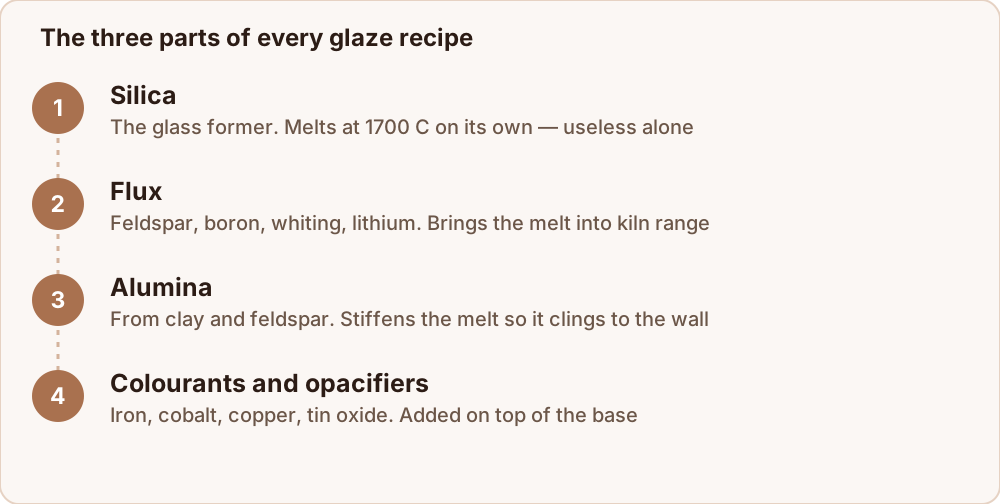
Silica, or silicon dioxide, is the glass former. It is the same material as window glass and beach sand, and it is what actually becomes the glassy surface.
The problem is that pure silica melts at around 1700 °C, far above any pottery kiln. On its own it is useless. Which is why every glaze contains the second ingredient.
2. Flux — the melter
A flux lowers the melting point of silica into the range your kiln can reach. It works by disrupting the silica structure so it liquefies far earlier.
Which flux is used depends on the temperature:
- Low fire (cone 06–04, about 1000 °C): boron compounds such as Gerstley borate or frits, plus sodium and potassium.
- Mid fire (cone 5–6, about 1200 °C): boron frits, along with feldspar, whiting (calcium carbonate) and sometimes lithium or strontium.
- High fire (cone 9–10, about 1280 °C): feldspar carries most of the load, with whiting, dolomite, magnesium and barium compounds.
Fluxes do far more than melt. They change colour response dramatically — the same copper gives green with a calcium flux and turquoise with a high-sodium one — and they change surface, from glossy to satin to matt.
3. Alumina — the stiffener
Silica plus flux alone would melt and run straight off the pot onto the kiln shelf. Alumina, usually supplied by clay in the recipe (kaolin or ball clay) and by feldspar, raises the viscosity of the melt so it stays where you put it.
Alumina also affects the surface. Push it up and the glaze becomes stiff and matt; drop it and the glaze goes glossy and mobile. It is the control that makes a glaze usable rather than merely meltable.
Feldspar is the workhorse ingredient because it supplies all three at once: silica, alumina and flux in one mineral. Many high-fire glazes are essentially feldspar with adjustments.
What gets added on top
Colourants — metal oxides and commercial stains. Small percentages of iron, cobalt, copper, manganese, chrome, rutile or nickel produce the entire palette. Cobalt at 1 percent is blue; iron at 8 percent in reduction can be a saturated black-brown that breaks rust at the edges.
Opacifiers — usually tin oxide or zircopax. These stay suspended rather than dissolving, scattering light and turning a transparent glaze white and opaque.
Suspenders — a small quantity of bentonite or a gum keeps the heavy particles from settling into concrete at the bottom of the bucket, and helps the raw glaze stick to the pot.
Where the materials come from
Almost everything on a glaze recipe is a mined and processed rock or mineral: feldspar from granite quarries, whiting from limestone, silica from quartz sand, kaolin from decomposed granite deposits.
The exception is a frit, which is manufactured. Materials are melted together, quenched in water, and ground back to powder. Fritting does two useful things: it makes soluble materials insoluble, so they do not leach out in the bucket, and it renders some toxic materials, such as lead compounds, much less bioavailable.
Why glazes are cone-specific
A glaze formulated for cone 6 fired at cone 10 will boil, run off the pot and quite possibly weld it to the shelf. The same glaze at cone 04 will be a dry, unmelted crust.
This is not a quality difference — it is chemistry. The flux package is chosen for a specific temperature window. There is no such thing as a general-purpose glaze that works across the range, which is why the cone rating on a jar of commercial glaze matters more than the colour on the label.
The fit problem
Even a perfectly melted glaze can fail if its thermal expansion does not match the clay body underneath.
- Crazing — a fine network of cracks. The glaze contracted more than the body on cooling and is under tension. It looks intentional on some pots and it is a genuine hygiene problem on functional ware, since liquid enters the cracks.
- Shivering — flakes of glaze popping off, usually at rims and edges. The glaze contracted less than the body and is under compression. This is worse: the flakes are sharp and can end up in food.
Fit is adjusted by changing the silica and alumina content, or by choosing a different clay body. It is the reason a glaze that works beautifully on one body can fail on another.
What you cannot do
You cannot make a ceramic glaze from household materials, and you cannot fire one in a domestic oven. Both are common searches, and both run into the same wall: the temperatures involved are between three and five times what a kitchen oven produces. Glazing means a kiln, whether it is yours or one you pay to use.
Where to go next
To apply it, see how to glaze pottery at home. To mix it from raw materials, how to make ceramic glaze covers weighing, sieving and testing. And if a glaze is beading off your pots, glaze crawling diagnoses it.