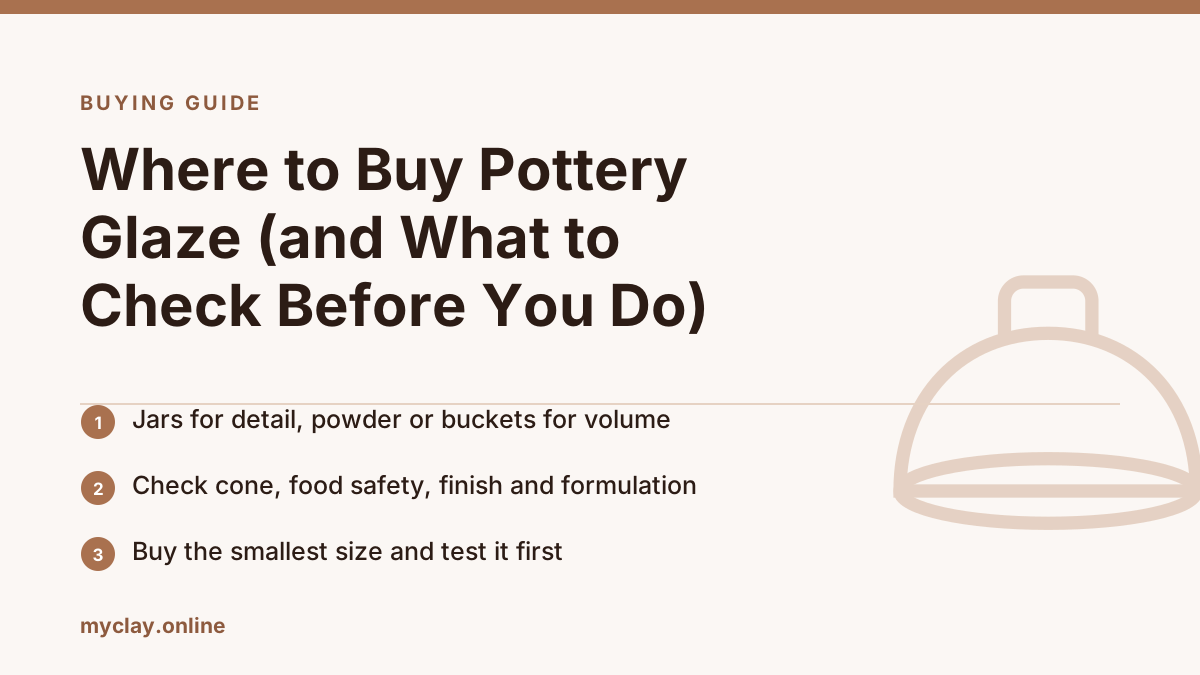
Glaze is sold in three formats, and choosing the right one saves more money than choosing the right shop.
From the studio: I bought five litres of a glaze on the strength of a catalogue photograph and got something two shades duller on my buff stoneware than on the white body it was shot on. A single small jar and one test tile would have told me that for a fraction of the price.
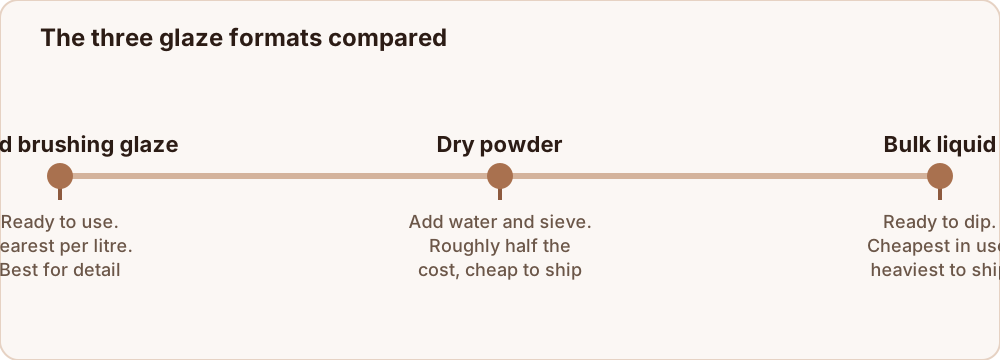
The three formats
Jarred brushing glaze — ready to use, thickened with gums so it flows off a brush without streaking. Typically sold in 100 ml to 500 ml pots. The most expensive per litre by a wide margin, and the right answer for detail work, small studios and anyone without space for buckets.
Dry glaze powder — a pre-weighed dry mix you add water to. Roughly half the price of jarred glaze per litre of usable glaze, and much cheaper to ship because you are not paying to move water. You need a sieve, a bucket and a dust mask.
Bulk liquid glaze — buckets of 5 to 25 litres, ready to dip. Cheapest per litre in use, heaviest to ship, and the standard for studios that dip everything.
Below a few litres a year, jars are fine. Above that, powder or bulk pays for itself quickly.
Where to buy
Ceramic suppliers
The proper source, and the cheapest for anything beyond a jar or two. They stock the recognised commercial glaze lines, dry powders, and raw materials if you want to mix from a recipe. They also employ people who can tell you which of their glazes actually fit which of their clay bodies — information no marketplace listing carries.
Search for "ceramic supply" plus your region. Most will ship, and glaze ships better than clay because a jar is light.
Your local studio
Studios often resell glaze, and more importantly, many have communal dipping buckets included in the firing fee. If you use a studio, this is usually the cheapest glazing you will ever do, and the results are predictable because everyone fires the same schedule.
Online
Fine for jarred glaze, where shipping is proportionate. Two cautions: buy from sellers who state the cone clearly, and be aware that glaze photographs are taken on a specific clay body at a specific thickness. The same glaze on your buff stoneware at your thickness may look nothing like the picture.
Craft and art shops
They carry a narrow range, usually low-fire jarred glazes aimed at school and hobby use. Convenient, expensive, and often light on technical detail. Check the cone before you buy.
Four things to check on any label
1. The cone. Non-negotiable. A cone 6 glaze fired at cone 10 runs off the pot; at cone 04 it stays an unmelted crust. Match the glaze cone to your firing and to your clay body's rating.
2. Food safety. If the piece will hold food or drink, look for an explicit statement. Absence of a claim is not a claim of safety. Note that the statement assumes correct firing — an underfired glaze is not food safe regardless of the label.
3. The finish. Gloss, satin, matt, opaque, transparent, breaking. A transparent glaze shows every mark of the clay and any decoration; an opaque one hides them. Matt glazes vary most between kilns.
4. Whether it is a brushing or dipping formulation. Brushing glazes contain gum and will drag if you dip with them. Dipping glazes brush unevenly. They are not interchangeable, and the jar usually says which it is in small print.
Buy small first
Glaze looks different on every clay body, at every thickness, in every kiln. Before committing to a large container:
- Buy the smallest size available.
- Dip an L-shaped test tile of your clay, with one end double-dipped.
- Fire it in your kiln at your schedule.
- Keep the tile with the glaze name and cone written on the back.
A drawer of test tiles is worth more than any catalogue photograph, and it turns a shelf of glazes into a palette you actually know.
Storing it
Sealed containers keep indefinitely. Glaze does not expire; it settles. Everything heavy sinks, so stir all the way to the bottom before every use — glaze taken off the top of an unstirred bucket is a different recipe from what the label says.
If a jar has dried to a solid, add water, leave it overnight, blend and sieve. Very little glaze is ever genuinely ruined.
What to buy first
A sensible starting set is smaller than most beginners expect, and it is worth resisting a shelf of colours.
One good clear glaze in your firing range. It goes over underglaze, over coloured slip, and over bare clay, and it teaches you more about application thickness than anything else because every flaw shows through it.
One white or off-white opaque. The workhorse for functional ware, and a clean ground for decoration.
One dark glaze — a tenmoku, a satin black, a deep blue. Dark glazes are forgiving of uneven application and immediately make work look resolved.
A small jar of one colour you actually love. Something to enjoy rather than to be sensible about.
That is four containers, and it will carry you through a year of work while you learn how thickness, clay body and firing schedule change the result. Adding a fifth glaze before you can predict the first four is how people end up with a shelf of half-used jars and no consistent results.
Buy them in the smallest size stocked, test each on an L-shaped tile of your own clay, and only scale up the ones that earn it.
Where to go next
Before ordering, know what cone you fire — cone 6 vs cone 10. To apply what you buy, how to glaze pottery at home. And if the cost of jars is what brought you here, how to make ceramic glaze shows the alternative.